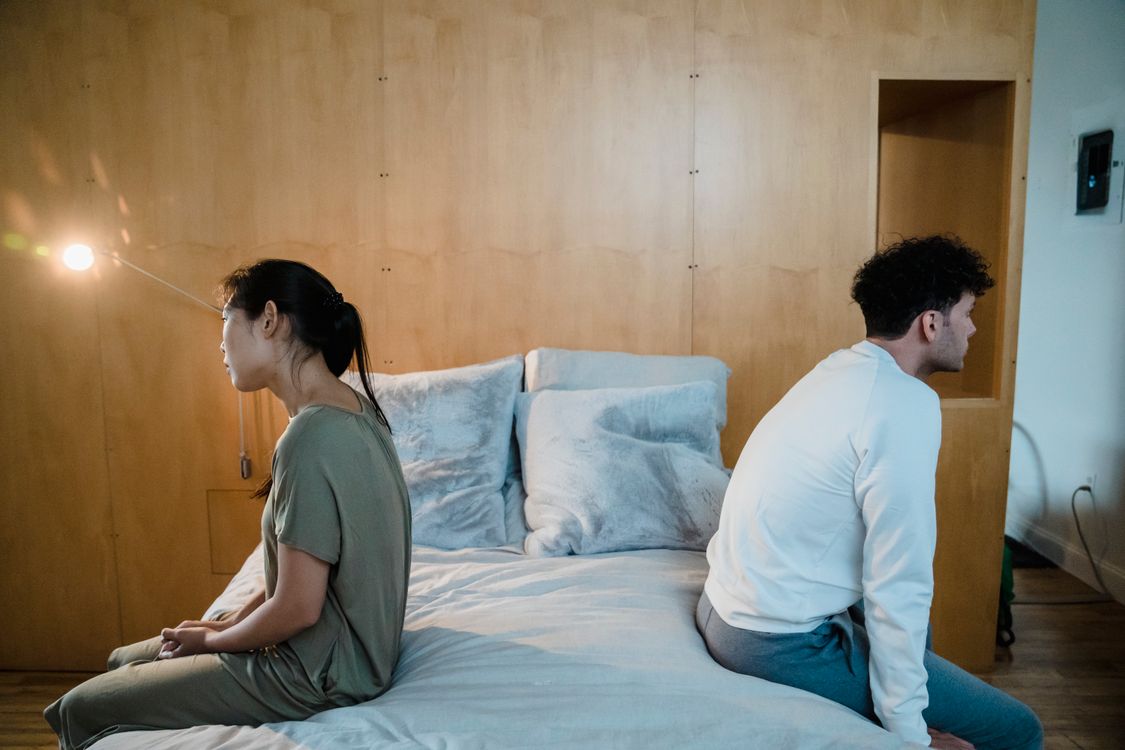

Most couples who come into couples therapy in New York and New Jersey say some version of the same thing in the first session: we keep having the same fight. The details change. Sometimes it is about money. Sometimes it is about how one person loads the dishwasher or responds to texts. But the fight itself, the actual feeling of it, the way it escalates and then goes nowhere, stays exactly the same.
That is not a coincidence.
When couples repeat the same argument over and over, it is almost never actually about the surface topic. It is about something underneath. Something that does not get named, so it never gets resolved. The dishes are not the problem. The dishes are the door.
The Fight Is Not About What You Think It Is About
The content of an argument, what was said, who did what, who forgot what, is usually not what the argument is really about. Most recurring fights are about two things: feeling unseen or feeling unsafe in the relationship. Both are attachment needs. Both are deeply human. And both are almost impossible to address when you are arguing about the dishes.
Here is what tends to actually be happening underneath recurring fights:
- One person feels like their needs consistently come last, and the dishes are proof of that
- One person feels criticized and starts to shut down, which the other person reads as not caring
- One person goes quiet to avoid conflict; the other person pursues harder because silence feels like rejection
- Both people feel misunderstood and end up defending their own position rather than trying to understand the other’s
None of this is visible on the surface of the argument. It is the pattern underneath the problem. And the pattern does not change just because you fight about it more loudly or more logically.
Why Talking About It More Does Not Fix It
Couples often try to resolve recurring fights by talking about them more thoroughly. Longer conversations. More detail. More explaining. More evidence of their own point of view. And it usually does not work.
That is because the underlying dynamic is not a misunderstanding. Both people already understand what the other is saying. What is missing is something different: feeling understood, feeling responded to, feeling like the other person actually gets what this is like for you.
According to the American Psychological Association, the quality of communication in relationships matters less than the emotional responsiveness underneath it. Couples who feel securely connected can fight and recover. Couples who feel disconnected tend to get stuck, regardless of how articulate or well-intentioned they are.
This is why couples therapy is not primarily about communication skills. Those matter, and you will learn them. But the more fundamental work is understanding what each person actually needs in order to feel safe and valued in the relationship.
What Happens When the Pattern Goes Unaddressed
Left alone, recurring fights tend to follow a predictable arc. Early on, couples fight and make up. The fight feels bad but the repair feels close. Over time, if nothing shifts, the make-up starts to feel less complete. There is a little more distance each time. One or both partners starts to feel like they are just managing the relationship rather than actually being in it.
Eventually, one or both people stop fighting entirely. Not because things are better. Because they have stopped expecting things to change. That kind of quiet withdrawal is often more damaging than the fights themselves.
This is also one of the most common reasons people wait too long to reach out. By the time they come into relationship issues therapy, the real problem is not the recurring argument. It is the accumulated weight of feeling like nothing ever changes.
What Couples Therapy Actually Works On
Couples therapy does not take sides. It does not decide who is right. What it does is create enough safety and clarity for both people to actually hear each other, maybe for the first time in a long time.
The work usually involves understanding each person’s underlying patterns: where they came from, what they are protecting, what they need. It involves slowing down the argument enough to see what is happening before it escalates. And it involves learning how to repair quickly rather than letting distance build.
At Rubin Therapy, couples work is relational and collaborative. The goal is not to fix your communication script. It is to help you understand what is actually happening between you, so you can respond to each other rather than react to each other. That shift is where things actually change.
If the same fight has been running in your relationship for longer than feels okay, that is worth paying attention to. It does not mean the relationship is failing. It usually means there is something underneath that has not had a place to land yet. Book a free consultation and see what it looks like to work on it together.
You Can Break the Cycle
The fact that you are still fighting means you are still trying. That matters more than it sounds. Couples who have completely disconnected do not fight anymore. They simply go through the motions.
If the same fight keeps happening, the pattern is not who you are as a couple. It is what has gone unaddressed. And that can change. Reach out to book a free consultation. It is a simple place to begin.
Frequently Asked Questions
Why do couples keep having the same argument?
Recurring arguments almost always signal an unmet underlying need rather than an unresolved surface issue. Both partners may feel unseen, dismissed, or misunderstood, and because the real need never gets named, the argument never fully resolves. It tends to cycle back whenever something triggers that same feeling again. Couples therapy in New York and New Jersey helps both people understand what is actually being asked for underneath the argument.
Is repeating the same fight a sign we should break up?
Not necessarily. Many couples with strong, lasting relationships go through periods of recurring conflict. What matters more than the fight itself is whether there is still willingness on both sides to understand each other and repair. If you are both still trying, that is a meaningful starting point. Couples therapy can help you move past the surface pattern and work on what is actually driving it.
What does couples therapy actually work on?
Couples therapy works on the patterns underneath the presenting problems, not just the problems themselves. That usually means helping each person understand their own tendencies in conflict, building the capacity to actually hear each other during difficult conversations, and developing faster, more genuine repair after disagreements. It is less about scripted communication techniques and more about building real understanding between two people.
How long does it take to change relationship patterns?
It varies. Some couples notice meaningful shifts within a few months. Others are working on patterns that took years to develop and need more time. Most couples feel some relief fairly early in the process simply from having a structured, supported space to talk. The deeper pattern work takes longer, but it does not have to feel hard the whole way through.
Can one partner go to couples therapy alone?
If your partner is not ready or willing to come in, individual therapy can still help you understand your own patterns in the relationship and how you might respond differently. That alone can sometimes shift the dynamic in meaningful ways. If you want to explore this, reach out for a free consultation and we can help you figure out the best place to start.